THE DOCUMENTS CASE — THE CHARGING RECORD
What prosecutors alleged
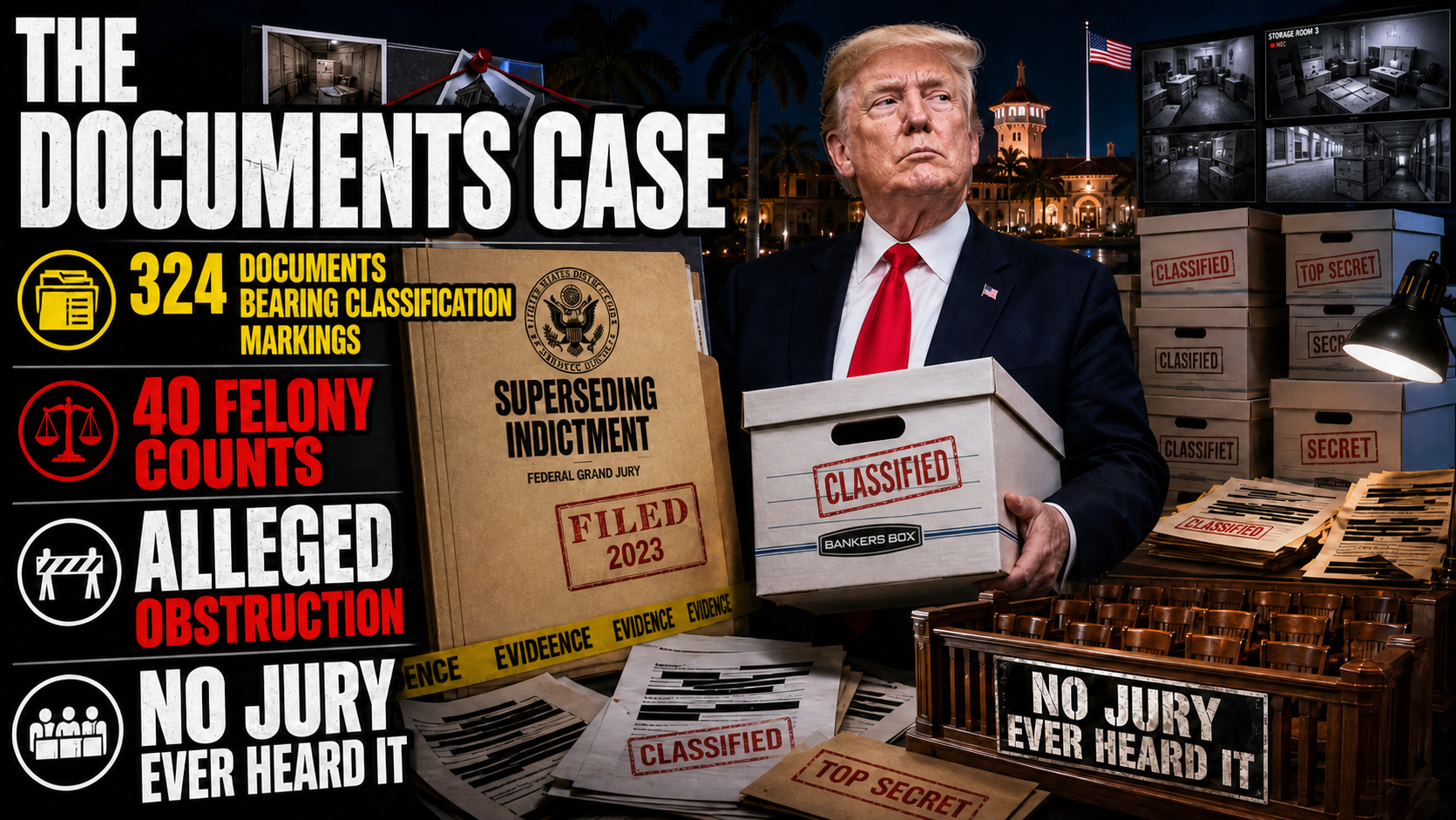
According to the 2023 superseding indictment:
- Trump took boxes of presidential records to Mar-a-Lago.
Prosecutors said some contained highly sensitive information about nuclear capabilities, military vulnerabilities, foreign militaries, and intelligence activities.
- The National Archives repeatedly sought their return.
Trump returned 15 boxes in January 2022. The Archives found 184 documents containing 197 classification markings and referred the matter to the Justice Department.
- A grand-jury subpoena demanded the remaining classified documents.
Trump’s attorneys turned over 38 additional documents in June 2022 and supplied a certification saying a diligent search had been conducted.
- The FBI later found more documents.
During the August 2022 Mar-a-Lago search, agents recovered 102 additional documents bearing classification markings—including material marked Top Secret.
- Prosecutors alleged obstruction.
They claimed Trump directed aide Walt Nauta to move boxes so they would not be found by Trump’s attorney, suggested concealing or removing documents, and later participated in efforts to delete security-camera footage. Those were allegations, not findings established at trial.
The 40 felony counts
The indictment included 32 counts of willfully retaining national-defense information under the Espionage Act, plus allegations of conspiracy to obstruct justice, withholding and concealing documents, schemes to conceal evidence, false statements, and attempting to alter or destroy surveillance footage.
The key legal distinction
Trump was not charged merely because documents carried classification markings. The principal statute, 18 U.S.C. §793(e), concerns national-defense information and whether someone knowingly retained it without authorization and refused to surrender it.
Trump argued that he had declassified the materials and that the Presidential Records Act allowed him to treat them as personal records. Prosecutors disputed those claims and maintained that the Act did not authorize a former president to retain national-defense information or ignore a subpoena.
Why there was never a trial
In July 2024, Judge Aileen Cannon dismissed the prosecution because she ruled that Attorney General Merrick Garland lacked constitutional authority to appoint Jack Smith as special counsel in that manner—not because she determined that Trump possessed no sensitive documents or that the obstruction allegations were false.
After Trump won the 2024 election, prosecutors abandoned the appeal against him under the Justice Department’s policy against prosecuting a sitting president. The proceedings against Nauta and Carlos De Oliveira also ended.
- Trump was never convicted in this case.
- He was never acquitted on the evidence.
- A jury never determined whether the allegations were true.
- The dismissal rested on the special counsel’s appointment, not the underlying conduct.
- The appeals court never decided whether Judge Cannon’s appointment ruling was correct because the appeal was withdrawn.
/ STAY ON THE RECORD
Follow the evidence.